
Rainforests, explained
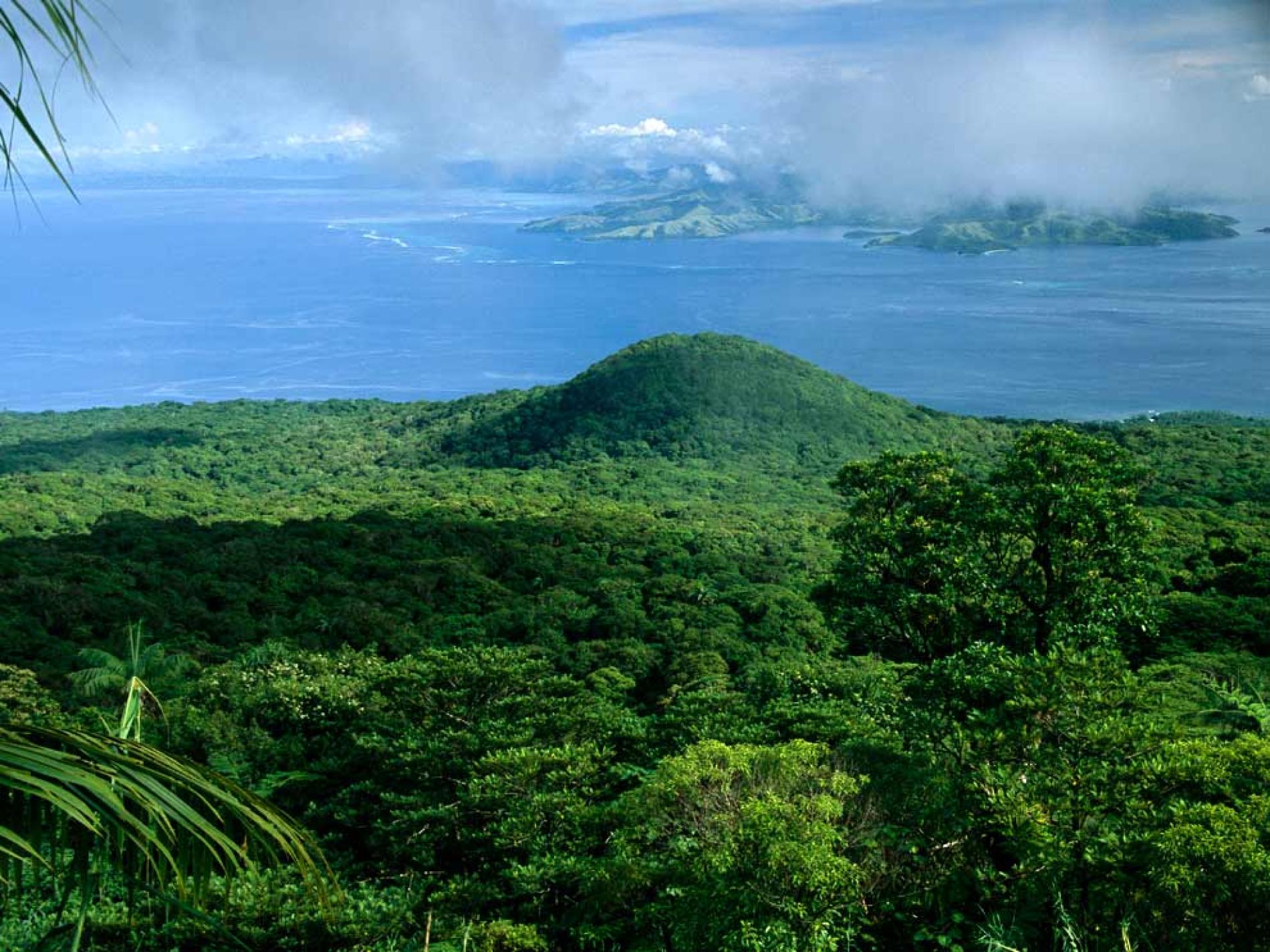
Found on every continent except Antarctica, rainforests are ecosystems filled with mostly evergreen trees that typically receive high amounts of rainfall. Tropical rainforests are found near the equator, with high average temperatures and humidity, while temperate rainforests lie mostly in coastal, mountainous areas within the mid-latitudes.
A rainforest is typically made up of four key layers: emergent, upper canopy, understory, and forest floor. In the top emergent layer, trees as tall as 200 feet (60 meters) grow far apart and tall, their branches reaching above the canopy. The upper canopy, a deep layer of vegetation roughly 20 feet (6 meters) thick, houses most of the rainforest's animal species and forms a roof that blocks most light from reaching below.
Below the canopy, the understory is a low-light layer dominated by shorter plants with broad leaves, such as palms and philodendrons. On the dark forest floor, few plants are able to grow and decaying matter from the upper layers is prevalent, feeding the roots of the trees.
Rainforests are often partly self-watering. Plants release water into the atmosphere through a process called transpiration. The moisture helps create the thick cloud cover that hangs over most rainforests. Even when it's not raining, these clouds keep the rainforest humid and warm.
Rainforest benefits
When we lose rainforests, we lose an important natural resource. Tropical rainforests are centers of biodiversity, holding an estimated half of the world’s plants and animals, many of which have yet to be catalogued (some scientists estimate that it’s two-thirds of the world's plants). Rainforests produce, store, and filter water, protecting against soil erosion, floods, and drought.
Many of the plants found in rainforests are being used to make medicine, including anti-cancer drugs, along with beauty products and foods. One drug under development for treating HIV, Calanolide A, is derived from a tree discovered on Malaysian Borneo. And Brazil nut trees refuse to grow anywhere but in undisturbed sections of the Amazon rainforest. There, the trees are pollinated by bees that also visit orchids, and their seeds are spread by agoutis, small tree mammals. Rainforests are also home to endangered or protected animals such as the Sumatran rhino, orangutans, and jaguars.
Forest trees also absorb carbon, an important function needed as human-caused greenhouse gas emissions stoke climate change. Rainforest loss is a double-whammy for the climate: It contributes emissions while removing a future potential source of carbon storage. Human activity has caused tropical rainforests to emit more carbon dioxide than they absorb at this point, according to one study.